




 14 / 84

12
よく切れる包丁の刃は、ノコ刃が立っています。切れ味を長く保つ為には、刃先(鋸刃)が削ぎ落とされ
ない様なSoft matを使用する事が包丁の切れ味を長く待たせる方法です。
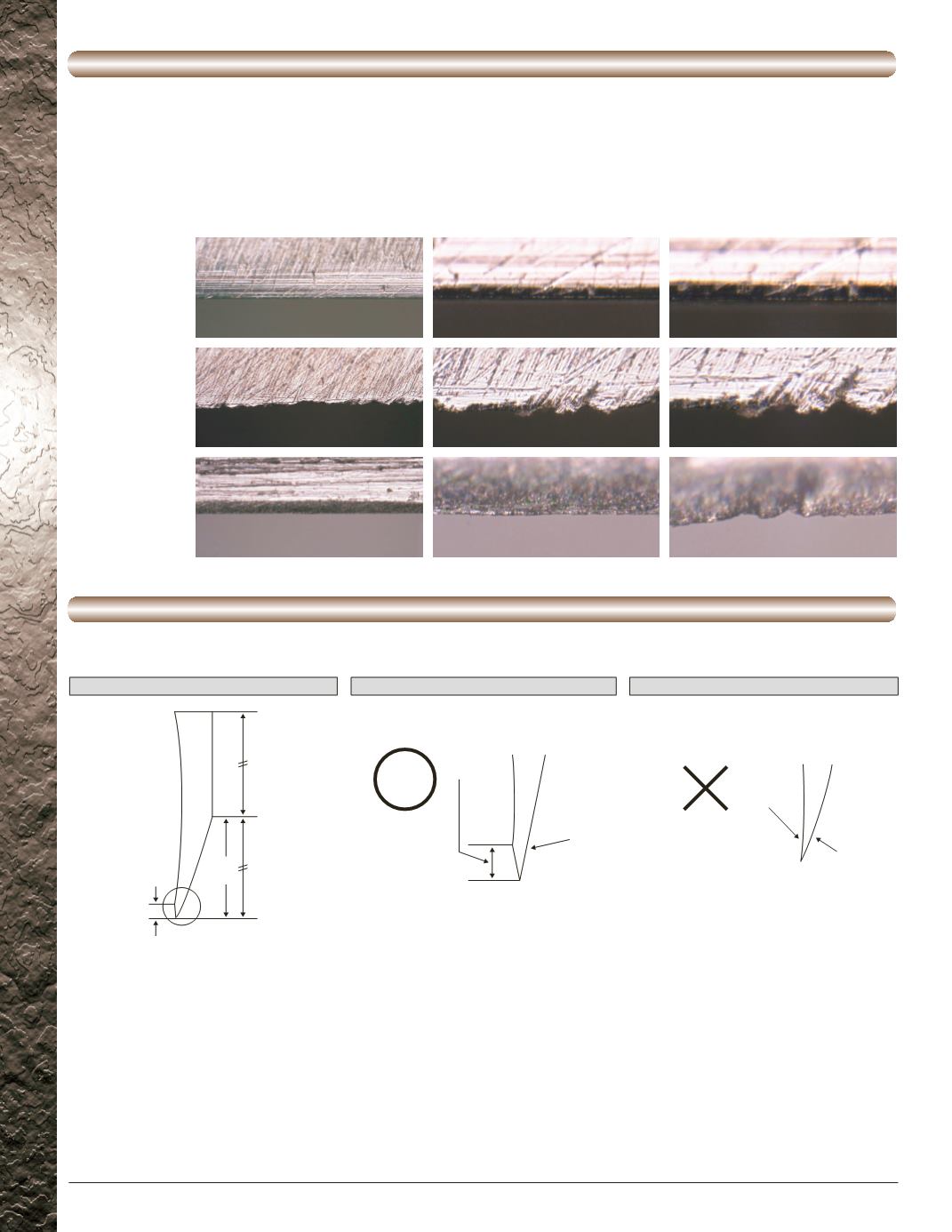
Under high magnification, a sharp knife blade looks like a fine saw. This saw-like structure gives the
blade the sharpness to cut cleanly.
500
倍
(500x Zoom)
使った包丁
(Used Knife)
新品の包丁
(New Knife)
新品の刺身包丁
(New Sashimi Knife)
2000
倍
(2000x Zoom)
3000
倍
(3000x Zoom)
強い
0.7m
(A)
裏研
ぎ
し
な
い
切刃
裏研
ぎ
弱い
強い
0.7m
(A)
裏研
ぎ
し
な
い
切刃
強い
0.7m
(A)
切刃
裏研
ぎ
Sharpening Thin Japanese Style Blades (Yanagi, Takobiki, and Usuba blades)
柳刃・蛸引・薄刃などの切刃のつけ方
切刃部分の研ぎ方
誤った研ぎ方
柳刃・蛸引・薄刃などは、和包丁のうち
でもとくに切れ味のよい刃物です。
したがってシャープな切れ味を殺さずに
研ぐためには、細心の注意が必要です。
Removing burr off of Japanese blades
is difficult because the back edge of the
blade is curved and also because there is
another edge on the back that needs to
be maintained.
表10回、裏1〜2回くらいの割合で研い
で下さい。切刃は全体をややたいらに
研いで下さい。
Make sure to maintain the curvature
and cutting edge of the back side of
the knife by properly maintaining solid
contact between the back edge and the
sharpening stone.
上図は切刃が広すぎます。しかも、裏
研ぎをまったくしていないか、裏研ぎ不
足です。このような刃形は、刃こぼれし
やすく、また刃先は弱いので切りさばく
力を失います。適度の裏研ぎ部分(図
A参照)を厚くして刃先を強くこぼれにく
くするためにぜひ必要です。
Be careful not to over grind the back
edge of the knife. Doing so will flatten
t h e c u r v e . Th i s w i l l p e rman e n tl y
damage your knife.
包丁刃先拡大写真
Blades Under Magnification
和包丁【柳刃・蛸引・薄刃】
Japanese Style Blades